When Is the Best Time to Paint a House Exterior in Upstate New York?
By the S&T Seamless team, Utica NY · Published 2026-09-15 · Last updated October 2026
In Upstate New York, the best time to paint a house exterior is roughly mid-May to early October, with late spring and September usually ideal. Check the label: most latex paints need 35–50°F or warmer, but aim for steady days in the 50s to 80s. Start after morning dew dries, keep surfaces at least 5°F above the dew point, and stop early enough for paint to dry before evening dew.
What is the exterior painting season in the Mohawk Valley?
In Utica, Rome, Herkimer, Little Falls and the rest of the Mohawk Valley, the realistic window for exterior painting runs from about mid-May to early October. Before that, nights are still too cold and siding is often damp from snowmelt and spring rain. After that, cold nights and heavy morning dew make it hard for paint to dry and cure properly.
Inside that window, the best stretches are usually late spring and late summer into September, when days are warm but not scorching and humidity eases. Midsummer works too, as long as the crew works around the hottest sun and the afternoon thunderstorms that roll through in July and August.
How cold is too cold to paint outside?
Start with the label. Most exterior latex paints list a minimum application temperature somewhere between 35°F and 50°F, depending on the product. Some newer formulas are rated down to about 35°F, while many standard paints and primers still call for 50°F or warmer. That minimum applies to both the air and the surface, and it needs to hold while the paint dries, not just when it goes on.
A label minimum is not the same as good conditions. For a job you want to last, aim for consistent temperatures in the 50s to 80s, with nights that stay above the label minimum while the paint is still drying.
Too hot is a problem as well. Paint applied to siding in direct summer sun can dry too fast, which leads to lap marks and weaker adhesion. Experienced painters follow the shade around the house: the east side in the afternoon, the west side in the morning.
Why do dew point and morning dew matter?
Dew point is the temperature at which moisture in the air condenses on surfaces. If siding is at or below the dew point, it is wet, even if it does not look wet. Paint applied over damp siding bonds poorly and peels early.
A common rule in the coatings industry is to keep the surface at least 5°F above the dew point during application. In practice, that means waiting for morning dew to burn off before starting, often mid-morning in late summer and fall, and stopping early enough in the afternoon that the paint can dry before evening dew settles in.
Fall is when this catches people. A sunny 60°F October afternoon feels perfect, but dew can form soon after the sun drops. Fresh latex that gets wet before it sets can show surfactant leaching: sticky, tan or glossy streaks running down the wall. It usually washes off, but it is a sign the paint went on too late in the day or too late in the season.
How long does exterior paint need to cure?
Drying and curing are different things. Most exterior latex paint is dry to the touch in an hour or two and can often be recoated within a few hours, per the label. Full cure, when the film reaches its final hardness, takes much longer, often a couple of weeks to a month depending on temperature and humidity.
During that time the paint is softer and easier to damage. Avoid power washing, leaning ladders, or hanging decorations against fresh paint, and expect cool fall weather to slow curing down. That is one more reason to wrap up exterior work before the nights turn cold.
What prep makes an exterior paint job last?
Paint quality matters, but prep decides how long the job holds up. A solid prep process includes:
- Washing. Removing dirt, chalking and mildew so paint bonds to the surface, then giving the siding time to dry fully.
- Scraping and sanding. Taking off loose and failing paint and feathering the edges so they do not show through the new coat.
- Repairs. Replacing rotted trim and siding boards instead of painting over them.
- Priming. Spot-priming bare wood and repairs with a primer suited to the surface.
- Caulking. Sealing gaps at trim, corners and windows with paintable exterior caulk, while leaving the bottom edges of lap siding open so the wall can drain.
- Protection. Covering plants, walkways, windows and fixtures.
On older homes, prep often takes as long as the painting itself, and it is where the real difference between bids shows up.
Why does paint peel on older Upstate homes?
Most peeling on older Central NY homes comes back to moisture. Paint fails when water gets behind it, from outside or from inside the house.
Moisture from outside
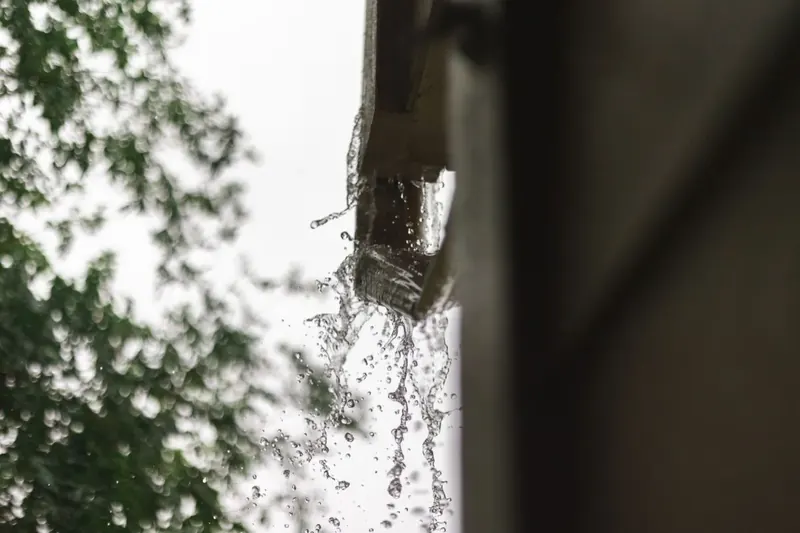
Overflowing or leaking gutters soak fascia and siding. Splash-back near the ground keeps the lower courses wet. Missing caulk and failed flashing let water in around windows and trim. If peeling is worst under the eaves or near downspouts, look at the gutters first. Properly sized seamless gutters often fix the cause instead of the symptom.
Moisture from inside
Many older homes have little or no vapor control in the walls. Moisture from kitchens, bathrooms and laundry rooms moves outward and can push paint off the siding, often right outside those rooms. Bath fans and range hoods that vent outdoors help a great deal.
Too many layers
A century-old house might carry many coats of paint. Eventually the stack gets thick and brittle, and it cracks and lifts as the wood moves with the seasons. At that point spot-scraping is not enough, and some areas need to come down further.
Lead-era paint
Homes built before 1978 may have lead-based paint under the newer layers. Scraping, sanding and power washing old paint can release lead dust and chips, which are a serious hazard, especially for young children and pregnant women. The EPA's Renovation, Repair and Painting (RRP) Rule requires contractors who disturb painted surfaces in pre-1978 homes to follow lead-safe work practices, such as containing the work area, minimizing dust and cleaning up carefully. If your home is older, ask any painter how they handle lead-safe prep before work begins.
What does exterior painting cost in Central NY?
Exterior painting typically runs $3–$6 per square foot of paintable surface, and a typical two-story home falls around $5,500–$12,000. Interior work runs about $2–$4.50 per square foot of wall, or $450–$1,100 for a single average room. These are typical Central NY ranges; your written quote is free and exact.
The biggest swings come from prep. A house with sound paint that needs a wash and a fresh coat sits near the low end. One with heavy peeling, lots of trim and wood repairs sits near the top.
Planning next season's paint job
Because the painting season here is short, it helps to plan ahead. An estimate in fall or early spring gives you time to compare options, choose colors and pick a start date that fits the weather. Once the exterior season ends, it is also a good time to take care of interior rooms.
S & T Seamless provides free in-person estimates with written quotes for interior and exterior painting across Utica, Rome, Syracuse, Albany and the surrounding area. We are licensed and insured. Request a free estimate or call (877) 879-4616, Monday through Saturday, 9 to 5.